Before the First Tube: Locking the Size Envelope
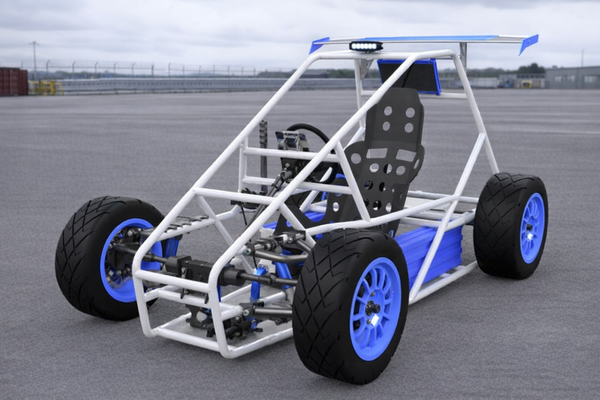
Before the first tube was drawn, we defined the E23’s size envelope — the real‑world limits that shape everything from trailer fit to handling. This post shows how a simple footprint decision unlocked the entire design.
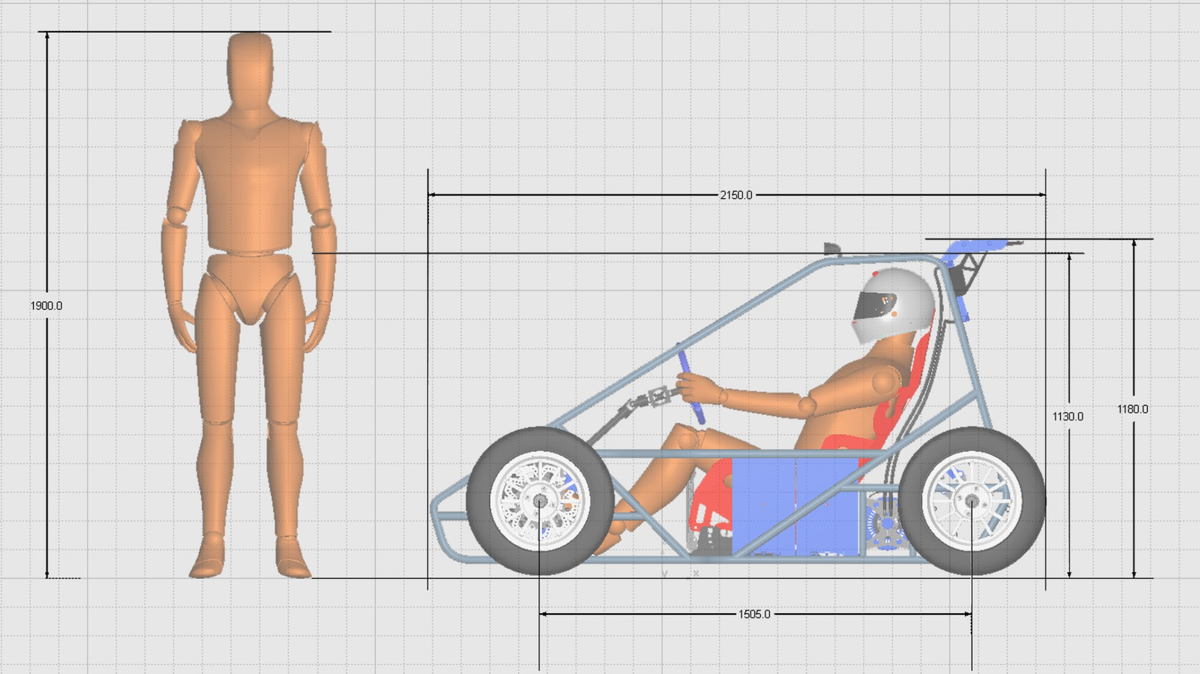
When you build something new, everyone wants to know what it looks like. How long? How wide? How tall? But the truth is, the E23 didn’t start with dimensions — the dimensions fell out of the job it needed to do. Once we sketched the use case, the next critical step was defining the envelope: the physical boundaries the machine has to live within before a single tube is drawn.
This is the part of development nobody glamorises, yet it shapes everything that comes after.
The Envelope Is the First Compromise… and the First Superpower
A performance buggy doesn’t exist in a vacuum. It exists in your garage, on your trailer, through gates, in car parks, on club tracks, and anywhere you can sneak in some sideways fun. If the machine doesn’t fit those environments cleanly, it doesn’t matter how fast, clever, or beautiful it is — you won’t use it as much.
So the E23 envelope isn’t a styling decision. It’s a freedom‑of‑use decision.
One of the earliest and most defining choices was transportability. At first, the goal was ambitious: fit the E23 on a 7×5 trailer with the wheels on. That constraint pushed packaging to the limit — and then some. Once batteries, ergonomics, suspension geometry, cooling, steering placement, and safety clearances were layered in, the 7×5 box proved too restrictive.
So we made a deliberate move that unlocked everything: shift to an 8×5 trailer envelope — still wheels‑on, still fuss‑free to load.
That single foot of extra width gave breathing room where it mattered: cleaner geometry, safer structure, and a layout that no longer fought itself. It was one of the quietest but most important decisions in the entire project.
Transportability Shapes Experience
One of our core goals for E23 is simple: more seat time. But seat time doesn’t start with batteries — it starts with logistics.
If you can’t move the buggy easily, you’ll drive it less.
If you can load it solo, you’ll drive it more.
If it fits in a compact space, you’ll drive it everywhere.
Designing to an 8×5 footprint ensures:
- A footprint that fits on a normal single‑axle trailer
- A width that slips comfortably through typical shed doors and club‑track gates
- A manageable mass and stance for solo loading
- A vehicle you can tow behind normal cars without re‑planning your weekend
These quiet considerations are what turn “owning a buggy” into “actually using it”.
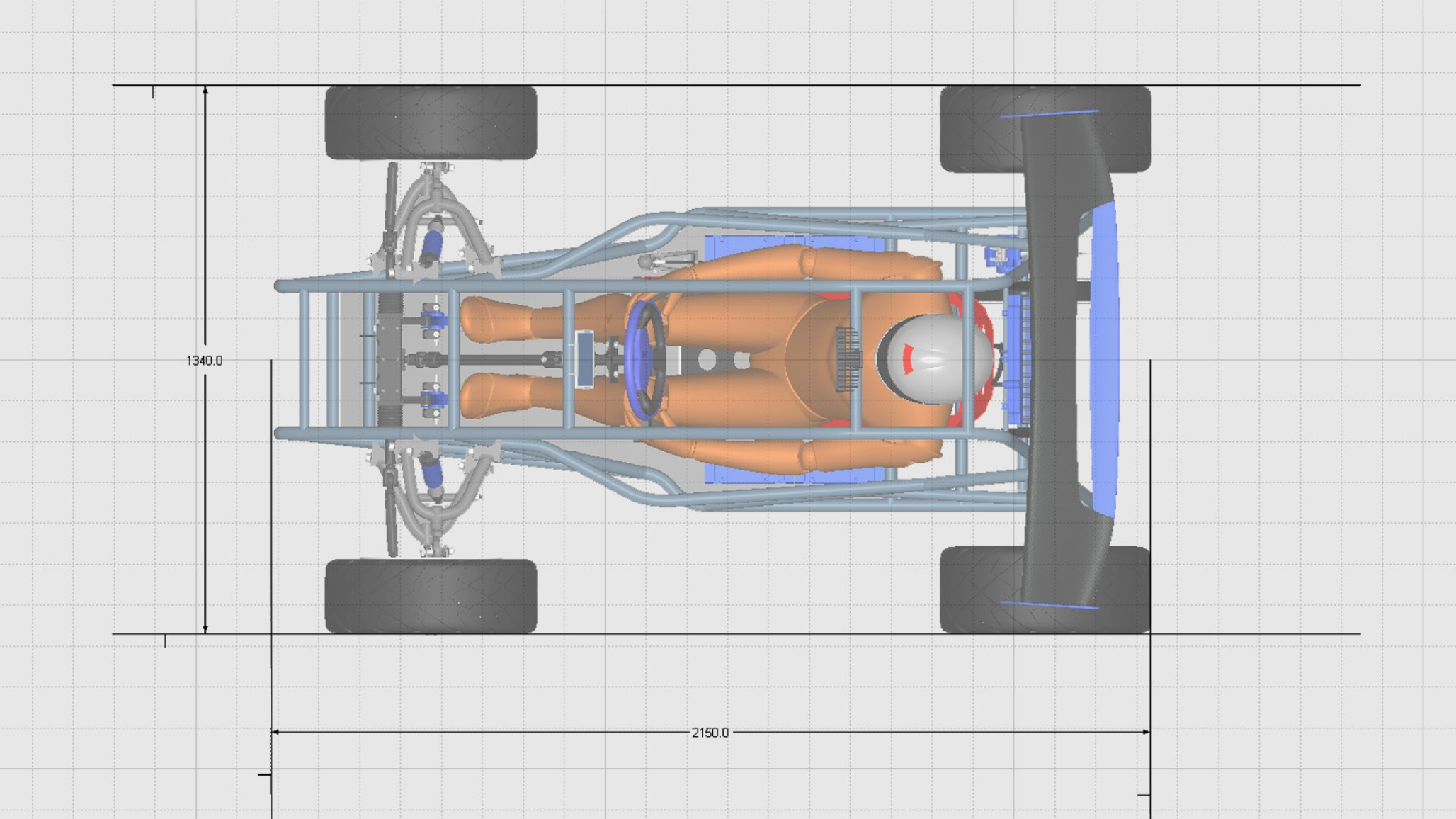
Wheelbase vs Track Width: The Invisible Geometry That Shapes Feel
With the outer boundaries set, the next question was proportion. Before locking in the chassis structure, we spent a surprising amount of time analysing wheelbase‑to‑track ratios against machines that live in similar spaces: drift cars, club autocross specials, rallycross lights, and lightweight performance buggies.
This wasn’t about copying numbers — it was about understanding character.
The research (folded into our E23 Specification sheet) helped us triangulate a sweet spot where agility, rotation, stability, and predictability all coexist. A ratio that:
- lets the E23 rotate willingly in drift,
- keeps it stable over mixed‑surface transitions,
- avoids the twitchiness that short‑wheelbase vehicles can suffer,
- and supports learning, not punishing mistakes.
The envelope set the outer limits.
The wheelbase:track study defined the attitude within those limits.
Venue Access: The Real Unlock
The performance world is full of incredible machines that require incredible commitment to use. That’s not the E23.
By intentionally compacting the package, the buggy becomes welcome in places big toys aren’t:
- Car parks and club circuits
- Tight mixed‑surface venues
- Short rallycross loops
- Training spaces where noise matters
- Any patch of tarmac or dirt you can make your own
Electric quietness removes one barrier.
The size envelope removes the rest.
We’re building a machine you can say “yes” to more often.
A Compact Envelope Still Needs to Contain Big Ideas
Even within tight boundaries, the E23 still needs to house:
- A modular, swappable battery system
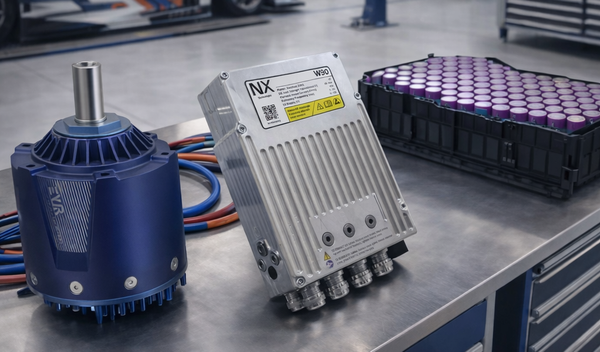
- Motor, inverter, cooling circuits
- Suspension geometry for both drift and mixed surfaces
- Real ergonomics for real sessions
- A safety structure you trust when things get enthusiastic
This is where packaging begins to earn its keep. The envelope forces us to think clearly about where mass lives, how systems layer, and how to keep the centre of gravity honest at all times.
The outcome isn’t just compact — it’s intentional.
Once the Envelope Locks In… the Real Design Begins
With the boundaries defined, we can finally start arranging the internals with confidence:
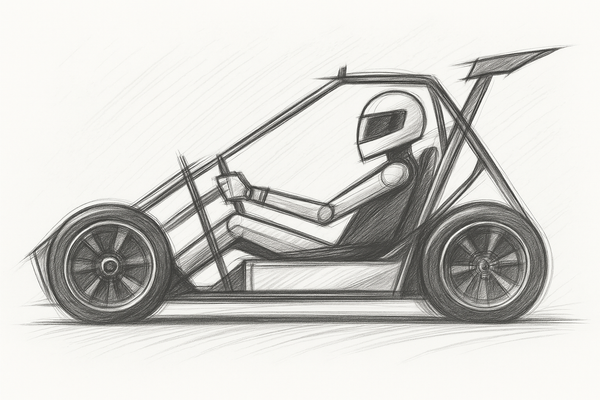
- Driver position
- Battery architecture
- Steering rack placement
- Suspension pick‑ups
- Structural nodes and load paths
This is the pivot point where the E23 stops being an idea and starts becoming a real vehicle. From here, the chassis sketch suddenly has something solid to hang onto.
And yes — after envelope and packaging come the delicious questions about tyres, geometry, and behaviour. But we’re not there just yet.
That’s the next chapter.