Start with the Sketch… But Not That Sketch
Design starts with a sketch, right? Not quite. For E23, the first step was defining the use case—because purpose drives every line.
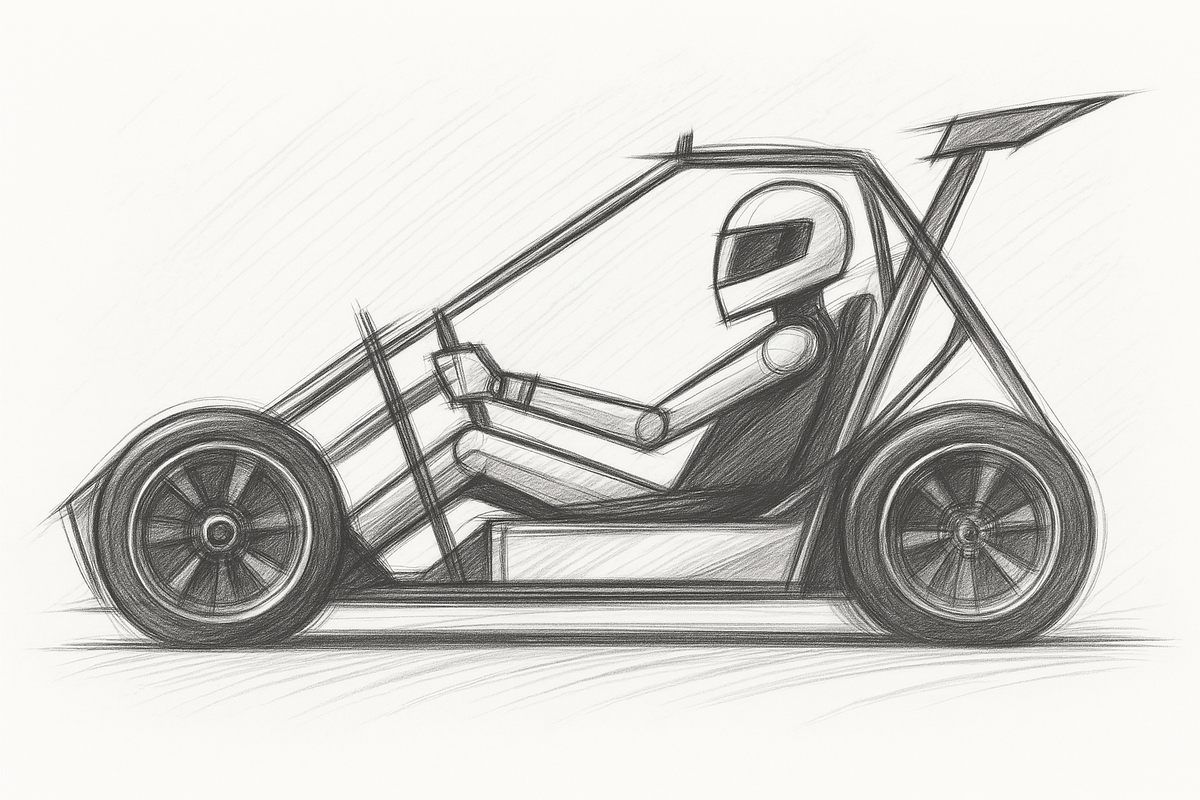
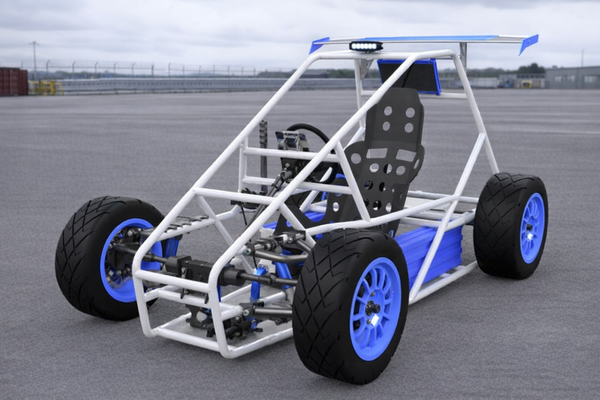
If you’re anything like us, a fresh design kicks off with a lovely pencil render, the kind that makes you want to hang it on the workshop wall and call it a day. It looks fast, it feels fast, and it whispers: go drive me. But here’s the twist: the chassis sketch, the one with all the triangulation and clever tubes, actually comes later in the journey.
First, we sketch the use case. What do we want the vehicle to do? Where will it live, play, and perform? That little list of real-world jobs becomes the Southern Cross for everything that follows: proportions, packaging, powertrain, batteries, steering, and yes, the chassis tubes that keep it all honest.
Define the Job Before You Draw the Tubes
For the E23, our early “use case sketch” was crystal clear:
- High‑performance recreational driving that fits more places — local streets, car parks, reserves and small tracks, with a compact footprint, easy trnsport and polite noise manners. Quiet electric running opens doors that loud petrol power can’t.
- Drift and rallycross fun — instant torque, precise throttle control, and a lightweight single‑seater layout that feels alive and teaches good car control without needing a racetrack every time.
- Maximum seat time — quick turnarounds, minimal faff, and energy replenishment that’s more like “refuel” than “recharge”. Modular, swappable packs give flexible sessions and keep you driving.
- Ownership that fits real life — offered as a fully specified kit or fully built vehicle, our “buggy‑in‑a‑box” approach to make delivery and setup genuinely convenient.
That’s the heart of the brief. Once we know the jobs, we can make the compromises on purpose—because every vehicle is a trade off between performance, packaging, and practicality.
Why the Chassis Sketch Comes Later
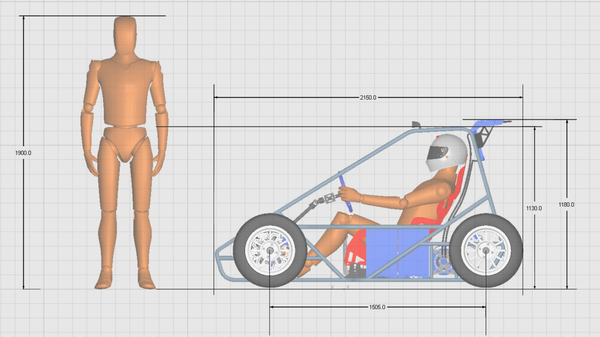
Chassis design is where geometry meets physics meets packaging; and packaging is driven by the use case:
- Driver position & control feel: drift wants a relaxed, communicative stance; rallycross wants stability over mixed surfaces.
- Battery placement: distributed modules help keep the centre of gravity low and the handling predictable—again, because seat time and confidence are part of the job.
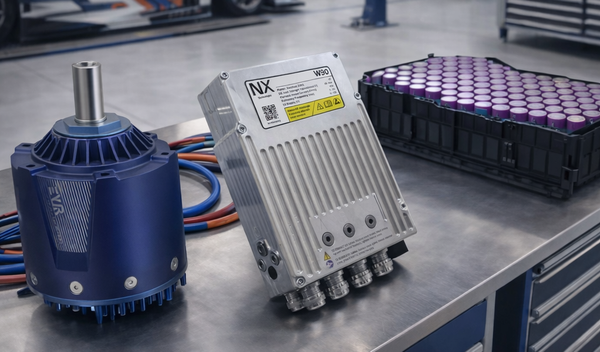
- Quiet, durable electrics: an electric layout with robust cooling and sealing so it’s happy in the real world, not just in a CAD screenshot.
So we map the jobs, choose the powertrain and battery strategy that serves those jobs, and only then do we lock in tube locations, nodes, and load paths.
The E23 Use Cases (and How They Shape the Design)
- Session-based drifting in car parks and club spaces → Compact footprint, quiet EV operation, instant torque, and quick battery swaps for back‑to‑back runs.
- Rallycross practice and mixed‑surface play → Lightweight single‑seater with responsive suspension and predictable balance, tuned for dirt and tarmac transitions.
- Convenience-first ownership → Two paths: fully built or fully specified kit. “Buggy‑in‑a‑box” pre‑assembly reduces tools/time at your end.
- More venues, more often → Electric quietness and compact packaging are deliberate, opening up places that would be off‑limits to noisy, large buggies.
A Word on Batteries (Our Secret Sauce for Seat Time)
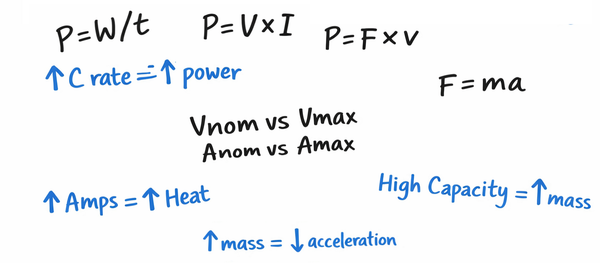
You’ll hear us talk a lot about seat time. It’s the currency of fun and learning. E23’s modular, swappable high‑voltage battery approach exists for exactly that reason: Keep your sessions flowing, minimise downtime, and let owners scale capacity over time rather than all at once.
Pair that with robust housings and sensible thermal/assembly choices, and you’ve got an electric system designed for real‑world use, not just brochure sparkle.