The Voltage Decision
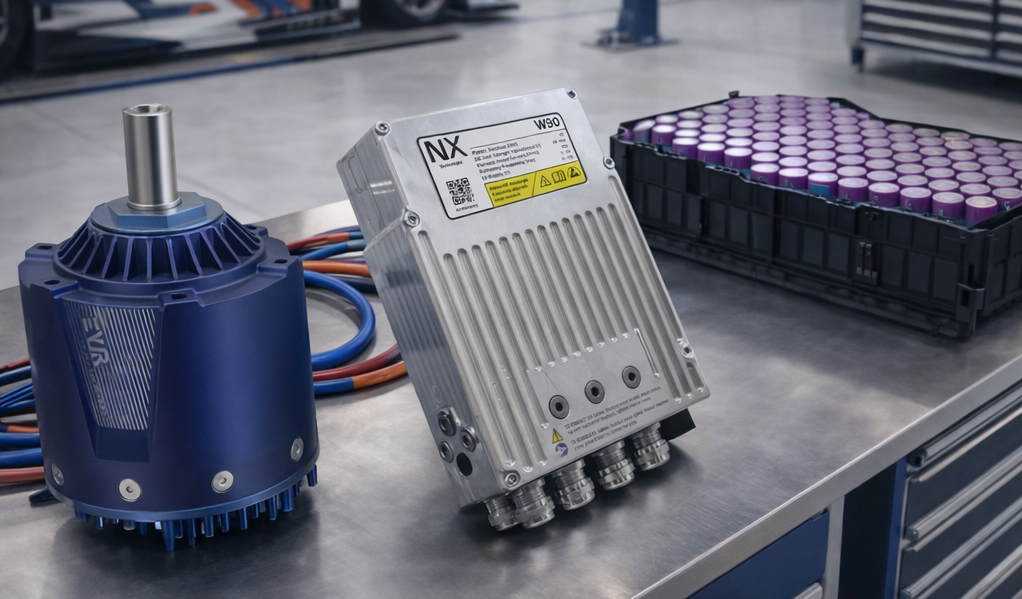
With performance targets defined, the next step was unavoidable: choosing a battery system, a motor, and an inverter. On paper, that sounds straightforward. In reality, it took months and quietly shaped almost every decision that followed.
Power Is Simple. Systems Are Not.
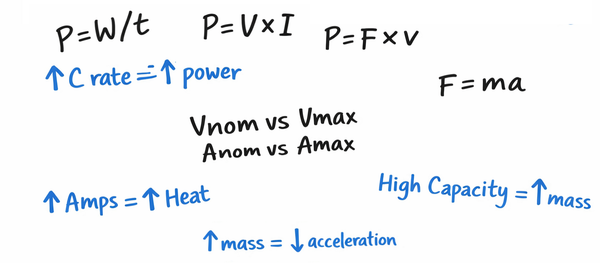
Power is easy to write down: P = V × A. Designing a real system means choosing where that power comes from, how it is delivered, and what compromises come with it.
We were not chasing novelty or extreme numbers. We were looking for:
- Strong, repeatable acceleration
- Sustained power without thermal collapse
- Reasonable mass
- Components that actually exist and can be sourced
One constraint stayed fixed throughout: we were not willing to reduce the performance targets to make the problem easier.
What Exists Off the Shelf
The first step was a broad review of what is actually available: battery systems (voltage, capacity, C‑rate, mass, size, cost, availability), motors, inverters, and proven operating voltage ranges. Very quickly, a clear split appeared in the market.
The Low‑Voltage Range (Up to ~120 V)
Below roughly 120 V, the ecosystem is dominated by hobby and light‑vehicle systems such as scooters, bikes, and one‑wheel platforms. These systems are excellent at what they are designed to do, but when mapped against our power targets, the limitations were obvious.
To achieve high power at low voltage, current rises rapidly. That brings consequences: large conductors, heavy connectors, high switching losses, and persistent thermal issues. Most batteries in this range are 3–5 C systems, so to supply the required current, battery mass grows very quickly.
Big batteries to supply high current lead to big mass, slower acceleration, and compromised performance. “Just add more batteries” sounds simple; in practice, it was a dead end.
Safety Is Not Just Voltage
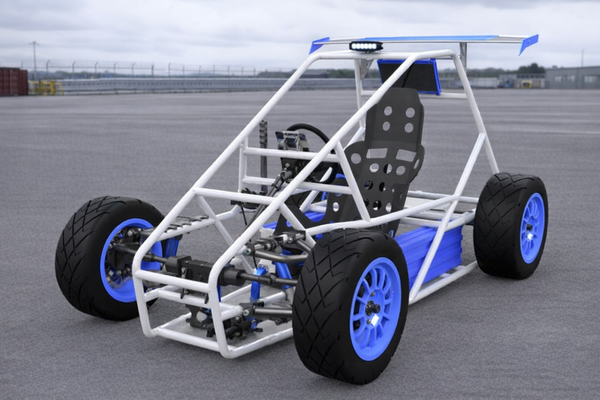
Low voltage is often described as “safe”. Electrically, that is true, but high current introduces its own risks: heat, conductor size, connector loads, and mechanical vulnerability in an exposed vehicle. In an off‑road buggy, big and heavy components are not benign; they are liabilities.
The High‑Voltage Range (400 V and Above)
At the other end of the spectrum sit more commercial‑grade systems with higher base voltage, lower current for the same power, more efficient motors and inverters, smaller conductors, and better thermal behaviour.
The trade‑off is clear. High voltage brings real safety considerations, especially in a lightweight, exposed vehicle. The physics, however, are equally clear. Lower current means less heat, lighter cabling, more compact systems, and power delivery that does not fight mass at every step.
Where This Left Us
After many iterations, the conclusion was unavoidable. Low‑voltage systems could be safe, but could not meet the targets without unacceptable mass and thermal penalties. High‑voltage systems could meet the targets, but required careful system‑level safety design.
That didn’t solve the problem. It defined it.
In the next post, we’ll look at why batteries are not just energy storage, and how C‑rate, mass, and range fight each other far more aggressively than most people expect.